How to Dispose of a Body
Posted September 30, 2024
A sustainable future requires leaders who benefit companies, societies, and the environment, and the Master of Sustainability Leadership equips you with the skills to lead initiatives and drive transformational change within enterprises. https://asuonline.asu.edu/online-degree-programs/graduate/master-sustainability-leadership-sustainability-leadership/?utm_source=youtube&utm_medium=video_paid&utm_content=sh-scishow-video&utm_campaign=02-sh_sustainability_leadership_msl&ecd22=02&utm_term=
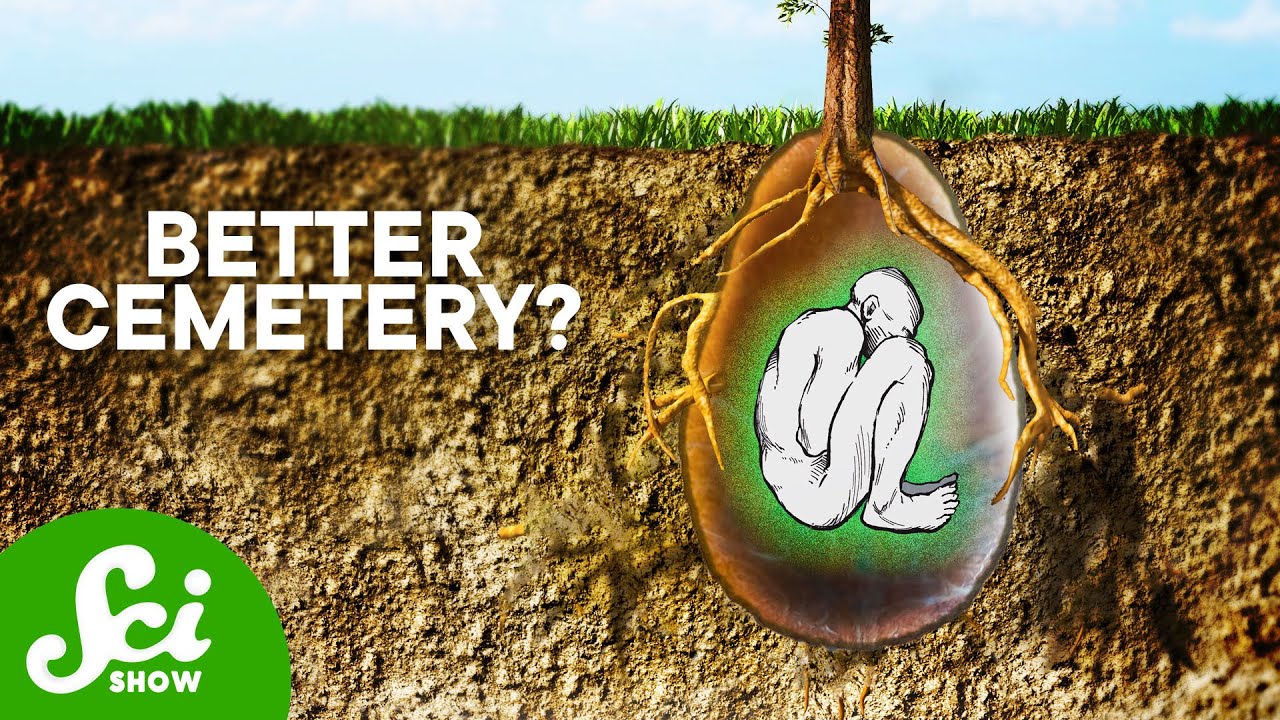
For everyone out there trying to live sustainably, you might also want to consider the best way for your loved ones to dispose of your body after you’re gone. Is a green burial best? What about human composting (where it’s legal)? And can you really grow a tree from your decomposing corpse?
Hosted by: Hank Green (he/him)
———-
Support us for $8/month on Patreon and keep SciShow going!
https://www.patreon.com/scishow
Or support us directly: https://complexly.com/support
Join our SciShow email list to get the latest news and highlights:
https://mailchi.mp/scishow/email
———-
Huge thanks go to the following Patreon supporters for helping us keep SciShow free for everyone forever: Odditeas , Garrett Galloway, Friso, DrakoEsper , Kenny Wilson, Lyndsay Brown, Jeremy Mattern, Jaap Westera, Rizwan Kassim, Harrison Mills, Jeffrey Mckishen, Matt Curls, Eric Jensen, Chris Mackey, Adam Brainard, Ash, You too can be a nice person, Piya Shedden, charles george, Alex Hackman, Kevin Knupp, Chris Peters, Kevin Bealer, Jason A Saslow
———-
Looking for SciShow elsewhere on the internet?
SciShow Tangents Podcast: https://scishow-tangents.simplecast.com/
TikTok: https://www.tiktok.com/@scishow
Twitter: http://www.twitter.com/scishow
Instagram: http://instagram.com/thescishow
Facebook: http://www.facebook.com/scishow
#SciShow #science #education #learning #complexly
———-
Sources: https://docs.google.com/document/d/10lQQhGSEpjoOg2pmyWBEq-VWVBTibCxk0ltv_NneJ4I/pub
We all have to share the same planet, so we need to work together to take care of it. Including all you dead people. But if you’re trying to have a sustainable afterlife, there may be conflicting factors to consider. Like, does the energy consumption of cremation outweigh the land use of burial?
00:15:Not to mention the newer options like human composting that haven’t been fully adopted yet. So here’s the science behind how to dispose of a body, the eco-friendliest way. So the lowest tech option on the list is burial. I mean, think about it. Digging holes in the dirt is a pastime
01:34:of kids everywhere. It’s pretty straightforward. And if you keep it straightforward, it can be good for the environment. But it really depends on how you’re buried. The term green burial refers to the simplest way of putting a body in the ground without all of the extras
01:47:that get in the way of decomposition. Things Like embalming, for instance. That makes the burial process less natural, because you’re removing a body’s natural fluids and replacing them with toxic stuff that’s meant to prevent decay. So unfortunately, as we attempt to preserve the dead,
01:01:we can do damage to the living. For example, the formaldehyde used for embalming can cause cancer. But it’s not just harmful to living people. It’s also harmful to the environment. When the preservatives and pesticides in embalming fluid end up in waterways near funeral homes,
01:16:they can kill marine plants too. So if you’re aiming for your death to be as green as possible, why not just skip all that? After all, stopping a body from decomposing is kind of the exact opposite of the goal of a green burial, where you want to break everything down
01:29:so it can be used by other organisms. But embalming isn’t the only thing you have to consider. If you want the body to decompose, a big fancy casket inside a concrete vault isn’t gonna do you any favors, either. In some places, it’s traditional to keep the body in a casket
02:44:that then goes into a metal or concrete box in the ground. And that’s not because people are afraid of a future zombie uprising. Although, better safe than sorry I say. It helps to keep the ground stable and avoid the dangerous sinkholes that can form as a body decomposes underground.
02:00:But those layers of casing are also blocking all the microbes in the soil that want to munch on your body. And even when your body does manage to decompose, they also keep all your good nutrients from getting into the surrounding soil. So if you’re hoping that something else
02:14:can put your body’s nutrients to good use after you’re gone, a more effective option may be to get buried without the outer casing, and even without a fancy… and often super expensive…casket. You can use wicker, sea grass, linen, or any other biodegradable material
02:28:to cover your body in a respectful way that doesn’t put up too many barriers for the organisms that are going to break it all down. Bacteria and fungi will transport your body’s nutrients through the soil so they can be used by nearby plants. In other words, you can become tree food.
03:44:Unfortunately, you probably won’t turn into a tree. Human bodies give off a lot of heat when they decompose, and that’s not a great environment for a sapling. So the idea of planting a tree over the fresh burial site of a loved one isn’t actually a great one. But a tree that’s already established,
03:59:and a little bit away from the body, can make use of those nutrients that had previously been locked up inside of you. Now, for a burial as green as this, you’ll still have some problems you need to consider. Like the whole sinkhole thing. It just means the spot you’re buried in
03:12:will require more maintenance. The groundskeepers will have to keep an eye on the burial site, and fill in the area with more dirt when it sinks down. So if you want your body buried, your options come in a range of eco-friendliness. But don’t worry if that’s not the way you want to go:
03:25:there are plenty of other ways to dispose of a body! This video is supported by Arizona State University’s College of Global Futures. That’s where you can learn how to create a more equitable, sustainable, and promise-filled future for everyone, and do it all online. Their programs help people make
04:41:a positive impact on the world with their careers. And there are a lot of programs to choose from. You could /literally/ become a master of sustainability leadership. The Master of Sustainability Leadership prepares you to advance social and environmental responsibility. In this program,
04:54:you'll gain organizational leadership skills with a focus on sustainability strategy and communication. The program prepares you to advance social, economic, and environmental responsibility. And you’re learning from professionals. The program is designed and delivered
04:08:by people who have worked in and with companies making sustainability transitions and continue to be on the forefront of global sustainability leadership. After one-to-three years, you’ll be ready to tackle any job from CEO to sustainability director.
04:21:You can get closer to that future today with ASU. Cremation is another one of the most popular ways to dispose of a dead body. And depending on which of the environmental impacts are the most important to you, it might be more eco-friendly than burial. But also, it might not.
05:36:For example, some researchers say cremation is better because it takes up less land than burial does. However, academics also say that there are a larger number of environmental concerns related to cremation, because it uses so much energy to hold the body
05:50:at the necessary 980 degrees Celsius for hours… That’s hot, that’s like, superhot. …And you end up releasing tons of gasses and polluting dust into the environment. One study calculated that for every minute a crematorium is operating, it emits the same amount of nitrogen dioxide
05:06:as 50 cars in the same amount of time! Now, this nitrogen dioxide mainly comes from the fuel that morticians use to heat everything up. So how eco-friendly cremation is varies from facility to facility, because they don’t all use the same kind of fuel. Some use gas, and others use oil.
05:22:Oil might take longer to heat up. And while the temperatures are lower, the combustion that happens can release more emissions. So burning hotter faster is good for reducing some emissions, but it also increases emissions of a different sort. And that’s because it takes more energy
06:37:to get that extra heat. A good post-treatment system can also keep most of the dust from escaping into the atmosphere. But not all crematoria have that. So just like with burial, some cremation techniques are better for the environment than others.
06:49:But there are even more sustainable alternatives out there. Take aquamation. If you haven’t heard of it, it might be because it’s only legal in some parts of the world… including but not limited to Australia, Mexico, South Africa, and parts of the US. But it’s a lesser known tech
06:04:that leaves about two-thirds of the carbon footprint that cremation does. Aquamation doesn’t need to get nearly as hot as fire cremation, so it uses much less energy. I’m talking 150 degrees Celsius instead of 980 degrees. The process is also known as alkaline hydrolysis,
06:21:which gives us a better sense of what’s actually going on. It makes it sound a bit like that infamous scene from Breaking Bad. But instead of dissolving a body in acid, aquamation uses the other side of the pH scale. Basically, you expose the body to a bunch of water
07:34:that’s got something like sodium hydroxide mixed in. But it’s not super concentrated. Like 5%. And that’s enough to break the molecular bonds throughout your body. That’s the hydrolysis part of it all. Hydro meaning water, lysis meaning splitting up. You are splitting up stuff by using water.
07:50:In this case, alkaline water. That’s why you need so much less heat. Hydrolysis does all the dirty work, but you can speed it up by turning up the temperature. And ultimately, it breaks down a body pretty fast. Now, aquamation does require a ton of water.
07:03:But other than that, it’s pretty environmentally friendly. And the water that’s used to dissolve the body is safe to return to our sewers for regular water processing. So it isn’t totally taken out of circulation or anything You have to spend the resources to get its water clean.
07:17:But otherwise, aquamation poses very little environmental threat. So if we’re leaning into the future of a sustainable afterlife, with tech that’s so new it hasn’t been adopted by the whole world yet, we might as well go whole hog and talk about terramation too.
08:31:Not whole hog in that you just feed yourself to pigs Terramation is also known as Natural Organic Reduction, or just human composting. And like aquamation, it also isn’t legal everywhere. But in the US, there are at least 10 states that allow it,
08:46:with legislation under consideration in a dozen more. As with most new tech, it may be a scary concept for people, but it’s been used to dispose of livestock for decades. It basically works like food composting, where microbes break down natural materials, also known as you,
08:02:so long as they have what they need, like water and oxygen. A professional can add a body to alfalfa, straw, and sawdust, rotate it every now and again, and voila! In four to six weeks, you’ve turned into roughly one cubic meter of soil that can help grow other stuff.
08:17:…Like a baby tree that wasn’t planted right on top of someone else’s remains! Even compared to a completely green burial, human composting might sound like the most hippy, natural way to go. But really, no option is perfect. And in the end of course, this is a very personal decision,
08:29:full of cultural significance for you and your loved ones. This video is definitely not here to shame anybody about their burial practices, it is here to help inform you of the environmental implications for some of the most popular… and new-fangled choices.
09:43:Because if that’s something you and your loved ones care about in life, you might think about it in death too.


 Watch Now